
By Alice Gill, Executive Director, Guernsey Chamber
Last week I had the privilege of joining a panel in Jersey to talk about Channel Island cooperation.
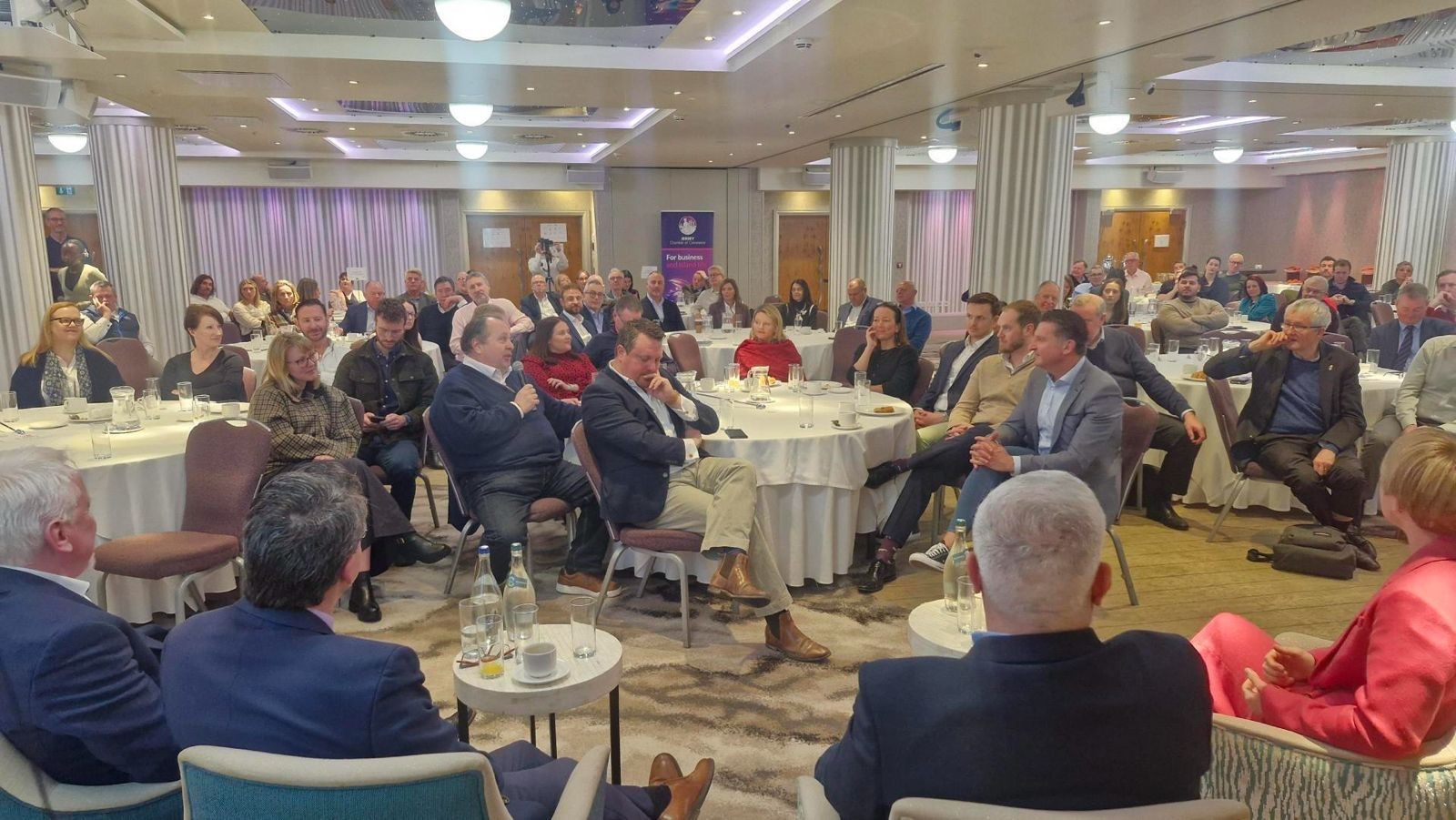
It was one of those conversations that leaves you equal parts hopeful and impatient. Hopeful, because there are so many obvious ways we can work better together, and impatient, because we all know what duplication feels like when you’re the one paying for it.
At the Guernsey Chamber of Commerce I see the friction and added cost faced by businesses operating across both islands. When you operate in both places, it can feel like you have to do everything twice, even when the goal is exactly the same.
One point that matters, and it came through clearly at the event, is that cooperation is already happening.
There are areas where the islands work well together, including cyber security, external relations, environment, and climate issues. And in business, cross island cooperation is often already baked in. Many firms operate across both islands, or partner across them, in legal, media, telecoms, hospitality, finance, charity, and professional services. Collaboration isn’t some shiny new concept – we just need more of it, more consistently, and with clearer accountability.
The economic cost
Across the islands we spend around £2bn a year on public services. With that scale of spend, smarter alignment and shared thinking stops being a ‘nice idea’ and becomes a serious lever for productivity and public finances. Duplication doesn’t just irritate businesses, it costs too.
From the outside, we are often viewed as the Channel Islands, but internally we have very separate identities, political structures, and decision making. I believe working together does not mean losing who we are, and we have a very specific example of this – the Channel Islands rugby team is a simple reminder that shared outcomes and local pride can sit side by side.
There’s also an economic mindset shift we should not ignore. If we think of ourselves as one connected economy of around 160,000 people, rather than two small markets running in parallel, it changes what feels possible. It helps businesses scale, invest, hire, expand and strengthens our external story too.
Proof that business can move fast when it chooses to
When the business community decides to align, it can create momentum quickly. Ahead of last year’s election, the Chamber worked alongside seven other business organisations, collectively known as the G8, to run a joint campaign that put business priorities clearly and constructively in front of candidates.
It started with a shared survey to capture what businesses were experiencing and what they needed. Then came joint messaging on key issues, including connectivity, housing, education and skills, tax, economic development, and public spending. That alignment powered a coordinated push across a website, events, hustings, social content, editorials, adverts and video, alongside a pledge for candidates to sign.
The point is not the campaign mechanics, the point is when business speaks with a clearer, more unified voice, things move. So much so ‘collaboration’ became one of the election buzzwords.
Where could we make real progress?
The panel discussion covered a wide range of practical ideas, real changes that could reduce waste, lower costs, and make life easier for the people trying to get things done. Here are a few areas that came up as strong candidates for progress:
Joint procurement –Buying together, at scale, can reduce costs. It’s not glamorous, but it works.
Healthcare – One of the largest areas of public expenditure. Even small shifts in shared planning or specialist collaboration could have meaningful impact.
Transport and infrastructure contracts – Shared thinking, joint tenders where it makes sense, and less reinventing the wheel.
Aligned processes for business – Taxation processes were raised specifically, but the bigger theme is reducing complexity for firms that operate across both islands. Where there are mismatched requirements, whether in regulation, employment processes, or administrative systems, it adds cost and slows growth.
Travel and practical connectivity
A common travel arrangement was discussed, alongside broader questions about how we improve connectivity in ways that feel modern and friction free. The tunnel idea always turns heads, but the more useful challenge underneath it is this. Why are we so quick to dismiss bold ideas, yet so willing to accept clunky travel arrangements as “just the way it is”?
The real question is not “what”, it’s “how”
If we’re honest, the list of opportunities is not hard to write, the hard part is momentum and long term buy in. A phased approach feels most realistic. Start with a small number of clear priorities, deliver early wins and prove it works. Trust is built through doing, then it can be scaled.
Yes, there are obstacles. Different political structures, different pressures and different priorities. That will always be true, but we do not need perfect alignment on everything to make progress on something. I see trust at the heart of this. Trust is built through regular contact, open dialogue, and strong relationships; it’s built when people keep showing up, even when it’s awkward, even when it’s slow, even when it’s not immediately rewarding.
What role do businesses play?
A big takeaway for me is that cooperation cannot be left solely to government to figure out. Businesses feel the friction first, and businesses can help create the pull for change.
As business leaders and teams, we can do a few things right now:
- Call out duplication with specifics. Concrete examples beat general frustration every time.
- Support pilots. Progress often starts imperfectly. Early movement builds confidence.
- Build cross island relationships in your own work. Then share what’s working, so others can copy it.
- Keep the tone future focused. If every conversation starts with “why it will never work,” we guarantee that it won’t.
For me, this isn’t optional. Cooperation is a necessity for future economic growth. It is also part of making the Channel Islands a more attractive, dynamic place to live and work, particularly for younger generations deciding where to build their lives and careers.
Our commitment at Guernsey Chamber
We’re committed to playing our part, and we want to work with you to understand where practical cooperation can start.
If you have examples of duplication that are costing time, money, energy, or opportunity, we want to hear them. If you’ve got ideas for early wins that could be trialled without years of debate, tell us. If there’s a barrier that feels particularly needless, flag it.
And on a very practical note, Jersey businesses are always welcome to use our office space when visiting Guernsey, host meetings with us, and attend our events. Let’s keep building relationships that make cooperation feel normal.
