
“If you’d stood on New York’s Fifth Avenue in 1900, you’d have seen a sea of horses and carts, with just one solitary motor car in sight. Fast-forward just 13 years, and the picture has flipped — cars had completely taken over”
AI expert, Peter Nyarkoh opened our recent Chamber workshop with this story, reminding us that technology shifts can feel slow… until suddenly they’re not.
It’s a lesson from history that businesses ignore at their peril. Think Nokia, Kodak, or BlackBerry: once dominant, but left behind because they failed to adapt.
AI is that same turning point for today’s businesses. And as Peter put it: “Whether you love it, fear it, or haven’t yet touched it, your competitors are already experimenting with it.”
Why SMEs Can’t Afford to Ignore AI
AI isn’t tomorrow’s tech — it’s already mainstream.
- 78% of organisations are using AI, up from 55% just last year.
- UK firms are saving an average of 40 hours a week through AI — the equivalent of ~£29k annually.
For small businesses, those kinds of efficiency gains are hard to ignore. The choice isn’t whether AI will shape your industry — it’s whether you’ll benefit from it, or watch your competitors do so first.
Where to Begin (Without Being “Techy”)
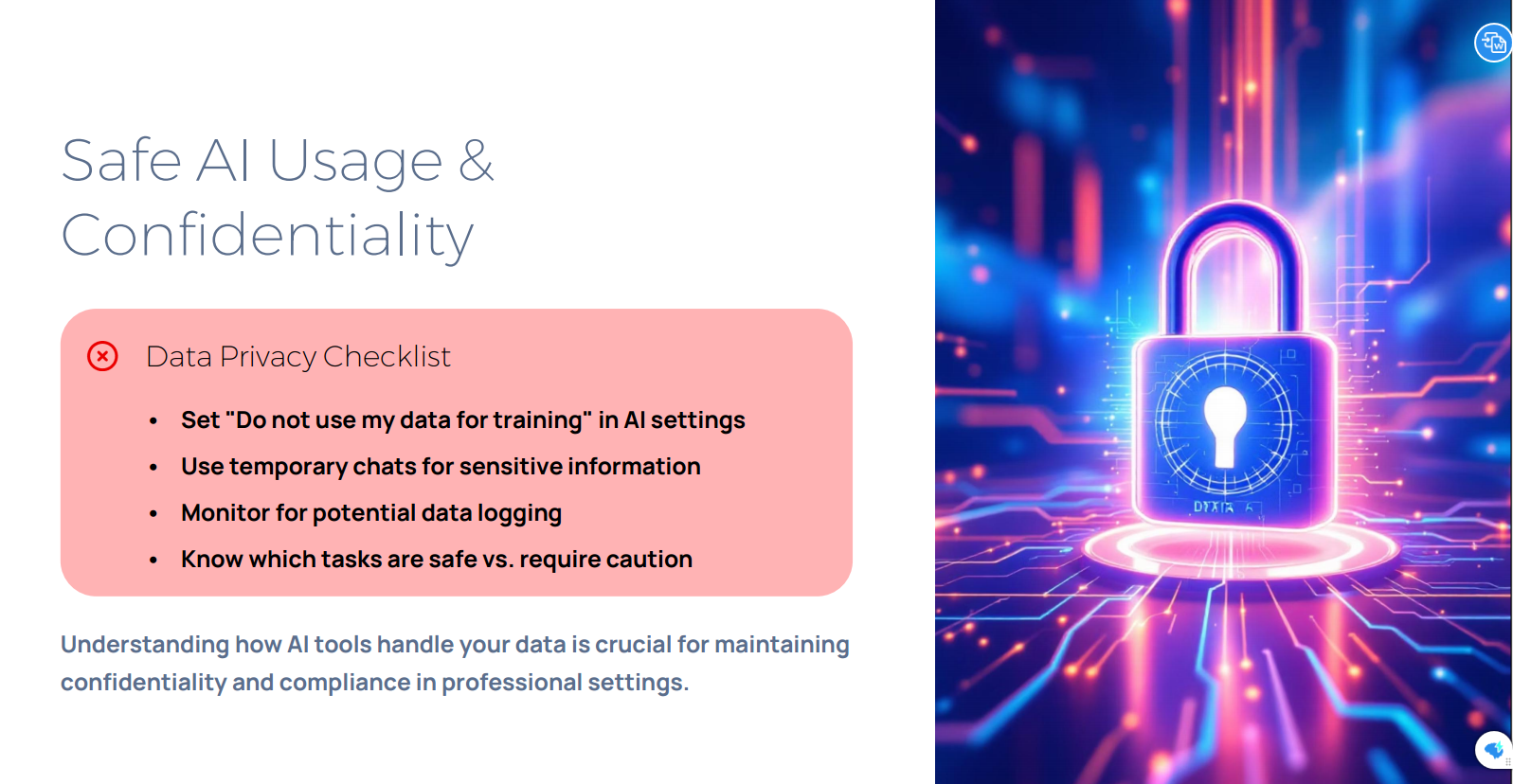
A lot of SMEs worry AI means overhauling everything at once. Peter’s advice? Start small, safe, and simple. Two slides from his workshop are especially useful here:
Staying safe: set chats to “do not train on my data,” avoid pasting sensitive client details, and use temporary chats for delicate info.
AI vs Automation vs Manual Work: some tasks are best kept human, some automated, and some enhanced by AI. The trick is knowing which is which. And perhaps the most reassuring model of all: “Think of AI as your highly educated intern.” Smart, eager, and full of potential — but it still needs your direction and final sign-off.

Quick Wins: AI in Everyday SME Life
Peter shared practical use cases across industries, showing how even small changes can make a big dent in your to-do list:
- Tackling inbox overload → AI can categorise emails, draft replies in your tone of voice, or even summarise sprawling threads. Tools like Superhuman or Microsoft Copilot can snooze, triage, and batch-process.
- Banking/Finance → AI generates one-page client briefings before meetings, transcribes calls into structured notes, and summarises complex regulatory updates
- Recruitment → Draft job ads, scan CVs in seconds, or personalise LinkedIn outreach at scale.
- Public sector → Summarise policy documents, flag anomalies in forms, or migrate data efficiently.
And here at the Chamber, we’re using it too. Every event we run is recorded, transcribed using Otter.ai, and then shaped into blogs, newsletters, and carousels with the help of ChatGPT. By applying one of Peter’s recommended prompting frameworks, we can brief the AI to deliver exactly what we need — freeing up time to focus on what matters most: curating more great events for our members.
The common thread? AI takes on the repetitive legwork, leaving you free to focus on the human side — the conversations, relationships, and decisions that really matter.
How to Get Better Results from AI
“Garbage in, garbage out” applies more than ever with AI. That’s why Peter encouraged businesses to use prompting frameworks, like CORE

- Give context: what’s the task, and why?
- Define the role: ask AI to act like a copywriter, recruiter, or compliance officer.
- Share an example: what “good” looks like.
- Specify tone and audience: British English vs. American, formal vs. friendly.
A Framework for Adopting AI
Once you’re comfortable, how do you embed AI more strategically? Peter outlined a simple 4-step AI Implementation Framework
- Start Safe & Simple – try email drafting or document summaries first.
- Spot Repeatable Tasks – if it eats hours each week, AI can probably help.
- Embed into Workflows – move from isolated tasks to integrated processes.
- Scale Strategically – invest based on impact, not novelty.
The key message? You don’t need a huge budget. Many tools have free tiers. A thoughtful £20 investment could be as powerful for your workflow as a £20,000 one.
Your AI-Powered Future
AI isn’t here to replace you — it’s here to amplify what you do best.
- Start small.
- Combine tools with the software you already use.
- Scale gradually as your confidence grows.
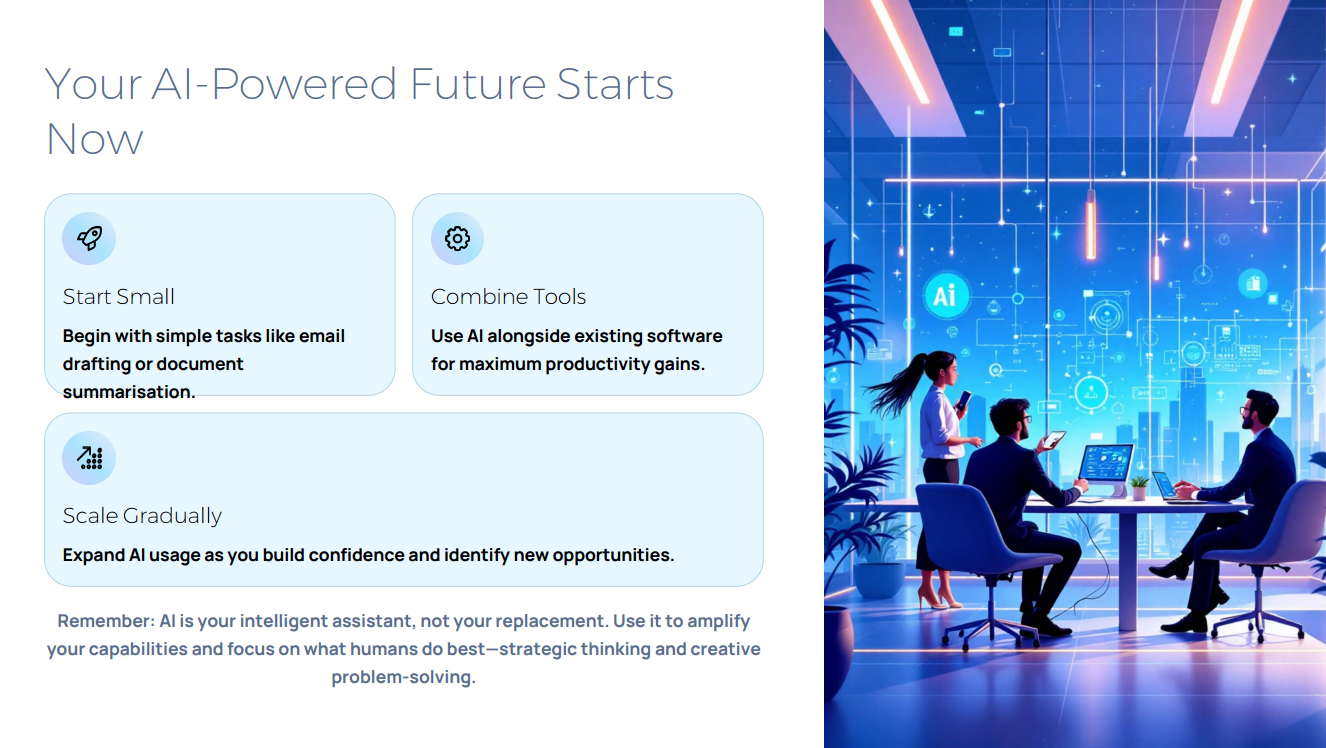
As Peter closed: “AI is your intelligent assistant, not your replacement. Use it to free your brain for strategic thinking and creative problem-solving.”
What’s Next.
Take a look at full slides here Boosting-Productivity-with-AI-Smarter-Ways-to-Work 16.09.2025 FINAL
And don’t miss our next AI event, we’ll keep bringing expert speakers like Peter to help businesses explore emerging trends safely and confidently.
